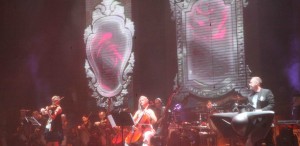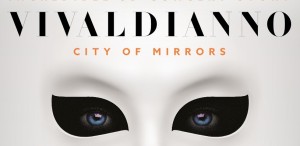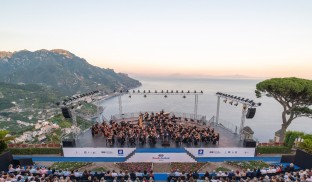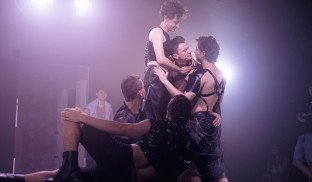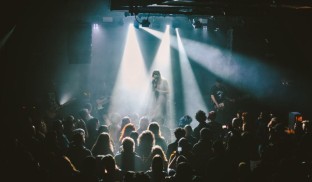

On May 21st, Sala Palatului concert hall in Bucharest saw the age, biography and above all the music of one the most beloved old composers of the XX century came to life. VIVALDIANNO was a complex, challenging, filmographic show, an appealing mis-en-scene of the fascinating universe of Antonio Vivaldi. Why (still) so fascinating?…
Un articol de Cristina Enescu Aky|31 mai 2017
- Vivald’s Seasons are among the most performed and listened to classical music compositions of all times.
- Over the paupers grave where Vivaldi was burried in ienna, today is the site of the University of Technology.
- Vivaldi was one of the first musical freelancers in Europe, a skilled entrepreneur, active manager and skilled publicity man for his works,
- Elements from Bach and Vivaldi’s conpositions are often found in heavy metal quitar riffs even nowadays.
Vivaldi – the superstar of both Baroque and the XX century
Within the holy trinity of Baroque composers, “Il Prete Rosso” (the redhead priest) Antonio Vivaldi certainly keeps a place of his own. Baroque (approx.. 1650-1700) still has long echoes in modern times: it was the age that organised the classicalereusic orchestra as we know it today, when opera became a celebrated genre of its own and when the concept of music as entertainment for the masses grew strong roots. The audiences of the time had gotten tired of the “old-fashioned” music of the Renaissance and was requesting more exciting things. Thus, music had to obey and become easier to sell. Being commercial for that time was, though, strongly blended with the idea that music reflects celestial harmonies, and that it should imitate and recreate the broad spectrum of human emotions, which is as beautiful and irregular as the shape of sweet water pearls (barocco). Powerful, incisive rhythms, lush and highly adorned musical phrasing, recovering certain themes with variations are major characteristics of Baroque music, that we find even today in jazz music, for example. Before this time, composers were servants of the noble, but the Baroque revolution made music itself become the servant of broad audiences, an accessible form of entertainment and refuge from daily life. We owe the Baroque age a democratisation of music and the public concerts similar to the one we are used to nowadays, beyond the walls of churches and palaces. The middle layer of society became more and more the main client of musicians, replacing the nobility as such. Sounds familiar? It is in fact the recipe by which the musical industry works since the XX. century. And Vivaldi was one of the first musical entrepreneurs of this industry.
VIVALDIANNO – A Baroque show that revives the Baroque
So, when did you read last about Vivaldi’s life, or the one of any of his equally famous colleagues from the past centuries? Exactly…. Maybe never. General audiences rarely discover the flavour of learning about both the music and the biography of an ”old” composer. Then again, what makes us believe, from the “height” (?…) of the XXI century, that 300 years ago life was much less exciting then nowadays? Myths, symbols, mysticism, the unknown of magic were part of everyday life just as FB or shopping malls are for us today. Life was imbued with hidden, exciting things at every step.
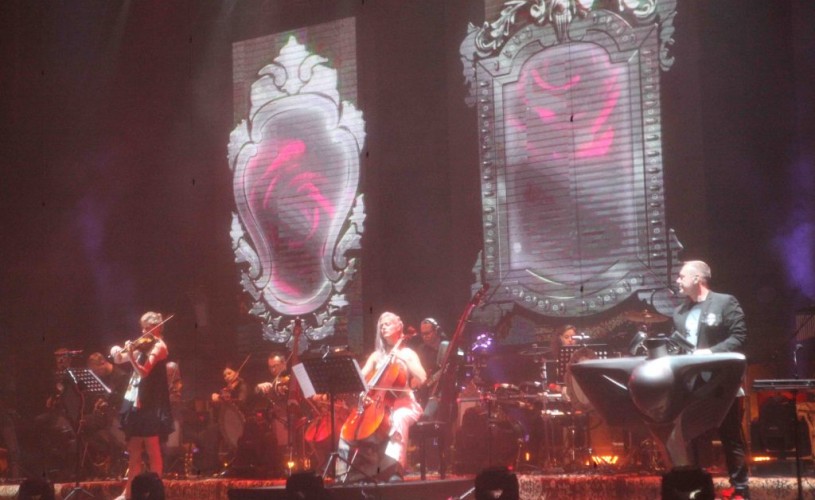
VIVALDIANNO has brought superb Baroque music braided with modern, at times exotic instruments, a DJ at a synthesizer (Michal Dvorak himself, the creator of this project), an extravaganza of colour and light, and in the background a Hollywoodian story with mystical thriller nuances (funnily enough, the characters speak in American English, the maid who takes care of Vivaldi’s house has the voice of a black woman from the suburbs…), intimate confessions, dialogues between people of that age, some history and lots of imagination. An entire musical meteorology (waves, storms, blossoming and decay, fire and floods, darkness and bright light), engagingly intertwined with excerpts from Vivaldi’s life.
More or less well-known works of Vivaldi were interestingly performed with some modern musical technology: electric guitars, synthesizer, South American style of drums and percussion instruments (like maracas), plus multimedia stunts generally encountered rather in rock or pop concerts. The narrative fabric, Vivaldi’s life story, was presented as we like to have stories told nowadays at the cinema: suspense, splits of mystery and mysticism, some gossip and juicy details, romance, humour, dramatic tension and a lot of feeling. The mysterious events from the night of the big earthquake that saw Vivaldi being born, the controversial but never clarified relationship between Vivaldi and Anna Giro, as well as his weird connection with a certain special mirror, his fabulous success and then decay in poverty and miserable death in Vienna (he was buried in the same paupers’ grave as Mozart, 50 years later) – these dramatized biographical episodes added flavour to the musical experience.
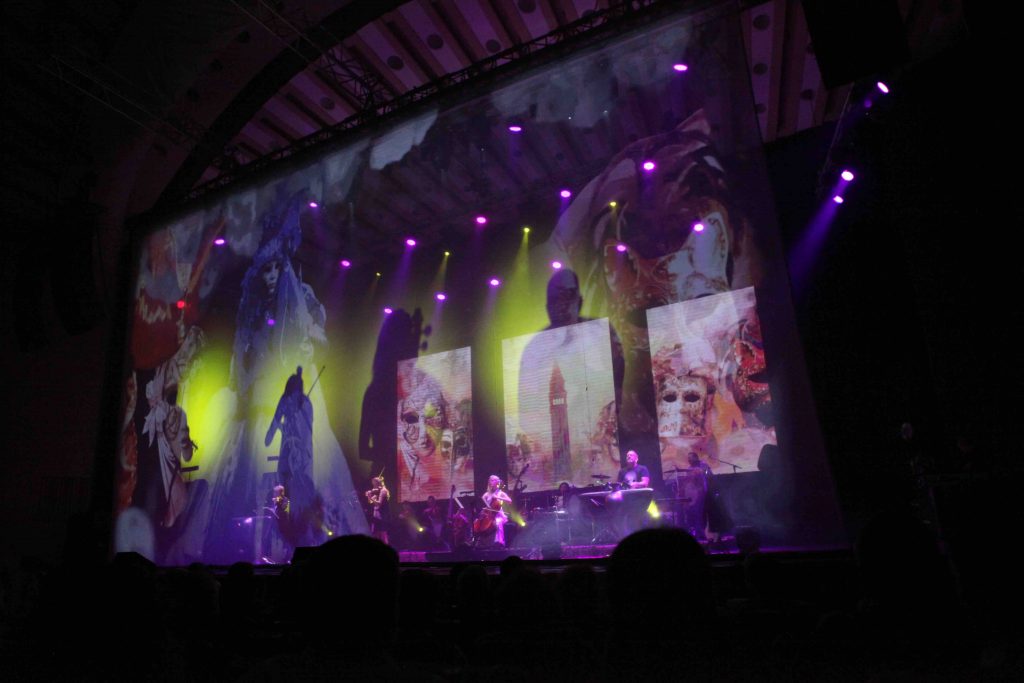
Venice… glamorous, mysterious, sometimes miserable but always seductive. The Venice in VIVALDIANNO is furtive and irresistibly enticing, just as the beautiful masks of the famous Venetian carnival. Superb stained glass projections, lights and shadows, the secrets bearing waters, stories of beauty and drama – they all come to life through 3D projections and particularly through the gorgeous music. The narrative circle is complete in the end, and the viewer can interpret it as he/she wishes: a mushy, Hollywoodian ending or a deep symbolism: the mysterious mirror grants its owner the power to reflect the world around him, enormously multiplying its beauty, but it also consumes the bearer of this gift. ”I know this mirror is cursed”, says a poor and sick Vivaldi approaching his end, ”but it’s all I’ve got. I gave everything to music, but nobody cares about it anymore. I have wasted my life, I chose the wrong path.” The enigmatic character that accompanies Vivaldi’s life from the shadow discloses what we already know: his music has given joy (this oh so very precious gift) to countless people all over the world, and will continue to do so beyond time and space. God had not been silent, by no means, as Vivaldi had thought, while trying to fill His silence with music! He had in fact constantly dialogued with him through what he composed.
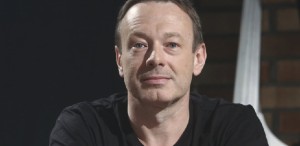
Dressed rather like a rocker, vibrating with a catching enthusiasm, Michal Dvorak (creator and master of ceremonies of this show) didn’t let the audience beg to much and offered two encores. Beyond the commercial success of this project, VIVALDIANNO surely stirred up the curiosity and interest for Vivaldi’s music among people not used to this musical universe, whereas for others, the passionate ones like myself, it provided an invigorating and entertaining visit of the Vivaldi world, wrapped up in an interestingly presented story.
Yeah, but…
The narrative episodes of the show were at times a bit too “Da Vinci Code” style, and the choreographies could have been wider and more wrought, also supported by Baroque inspired costumes. “I was expecting to hear the violin more, at a Vivaldi concert”, I heard. Indeed, sometimes the drums and the electric guitars were louder, or the synthesizer. However, the altar of classical music – the classical concert hall- remains eternally valid and unaffected by such shows. Surely, VIVALDIANNO was attended by a big audience that does not enjoy daily ecstasies through classical music, as well as by people who love and know it. The cheering of the full concert hall was a proof that the show managed to reach and touch both types of audiences.
A beautiful show
The Baroque era gave the audience of its time what this had asked (the transformation of music in a more human, intensely emotional and widely accessible experience), thus setting a good example for a music simultaneously commercial and of high value and beauty. In some way, VIVALDIANNO pull s off the same thing, by revisiting Vivaldi in a modern, yet faithful way (to the original music). The rebirth of Vivaldi goes on.
Foto: Laura Dobre / Ziarul Metropolis