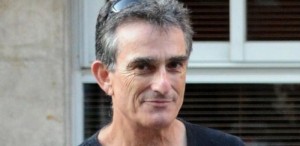

Amir Kolben is the Dean of the Dance Faculty at the Jerusalem Academy of Music and Dance, and also the founder, Artistic Director and choreographer of the Kolben Dance Company.
Un articol de Cristina Enescu Aky|15 iunie 2018
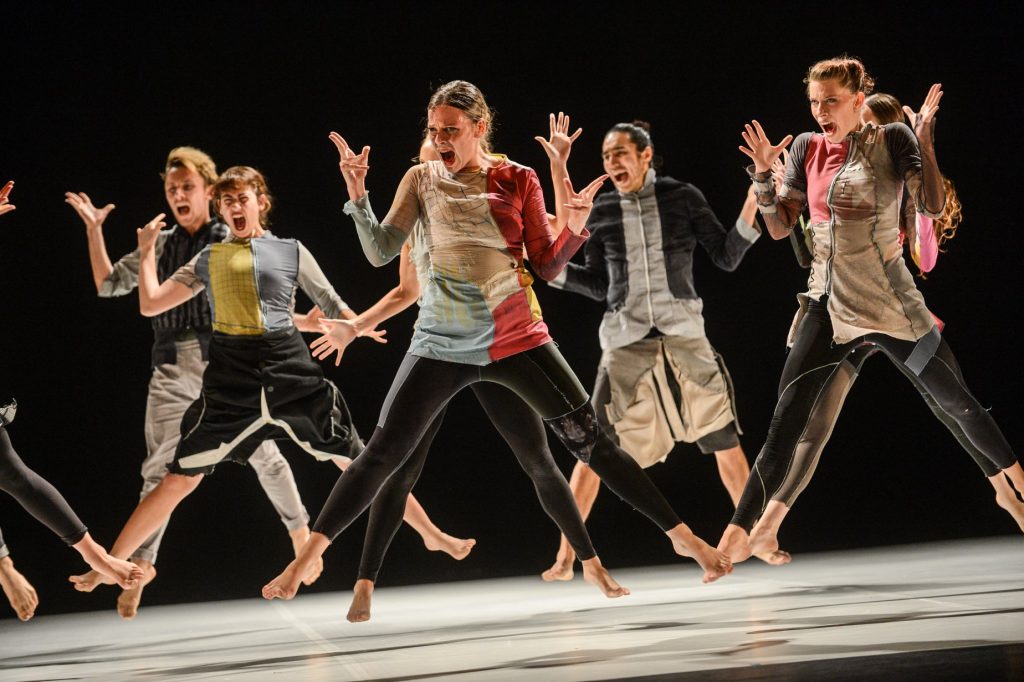
A former dancer at Batsheva Dance Company and Israeli Ballet, among others, he is one of the prominent choreographers of Israeli contemporary dance. At FIST 2018, his company presented On The Edge, an exciting show that starts before starting (through the direct interactions of the dancers with the public, and which explores the state of being on the edge at both a personal and an interactive level.
Talking at the FITS conference about this show, he defined dance as both a curse and a blessing at the same time. ”It’s amazing how such a material thing, the body, can also be so abstract. Looking at dance, people often feel they don’t understand anything from what the dancers and the choreographer want to tell them. I think that’s wrong, people do understand, they just don’t allow themselves to say ‘Yeah, I understand’ – not because they don’t want to, but because we are not trained to really look at body movement. We do understand movement perfectly well – if someone is coming, you can tell 100 meters away that you’d better stay away from that person, or if you can get closer. Even when we don’t see facial expressions, we understand movement. That’s a survival thing,not understanding that the elephant over there is angry would have most likely made our ancestors disappear a long time ago.”
Tackling his personal drive behind the shows he creates, Amir Kolben said he is “trying to get people closer to dance because I want dance to be a part of their lives, not only intellectually. Exactly what people normally do in clubs, when they feel free. Why not do the same in art too?For me, seeing the dancers very close gives you a much more powerful, deep dance experience.”
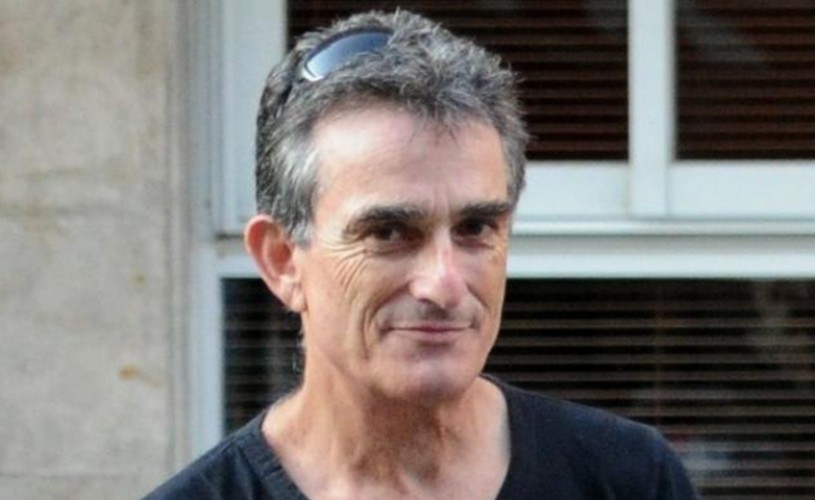
Choreographer Amir Kolben
On the topic of the understanding barrier that many people perceive when watching dance performances, he agreed that “this obstacle definitely exists. I’ve dedicated my life to dance, particularly contemporary one, and I still go to performances at times and I don’t understand anything. And I don’t really mind. Getting inside the mind of a choreographer is difficult, I can even try to explain to you as honestly as possible, but you might still not understand.Movement is a language in itself, has its own vocabulary. Dance is a specific language that can only very partly be translated to words. If I do this movement or the other, you may not understand something, but you will surely note the difference and have different experiences of the two movements. So I think we need to educate people to trust their senses.Approaching it with this positive attitude, rather than a critical one, like “I don’t understand anything” is a better way to teach such an abstract language.
At some point during “On The Edge”, the dancers come in front of the stage and, in their native languages, present themselves briefly, in a highly direct personal and unpretentious way. This creates a unique sense of communication and connection with the audience. “I was looking for simplicity, which is always a challenge for me.My choreographies always seem to get more and more complicated, beyond my reach. When I do manage to reach simplicity, I am very happy. So that was a very simple, direct moment, which otherwise wouldn’t have been achievedBringing individuals to the stage, rather than just dancers, is always one of my challenges. I don’t want to see 10-20 dancers doing exactly the same thing with very similar body physiques. I can be impressed by that, but I’m only moved by individualities.”
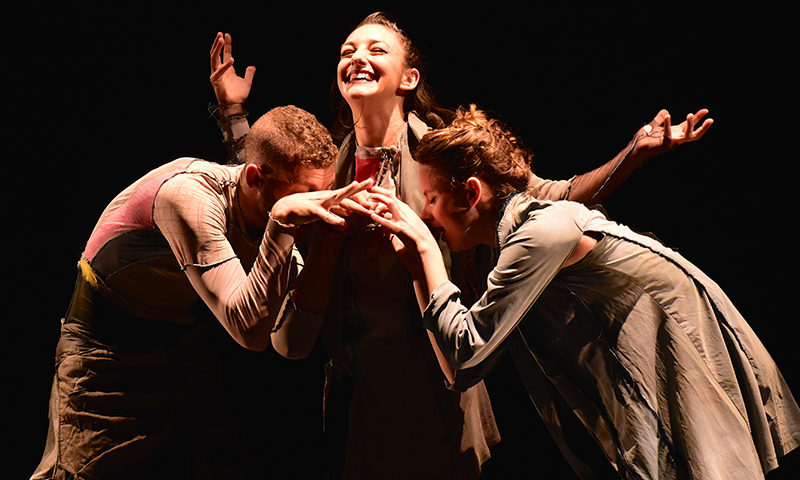
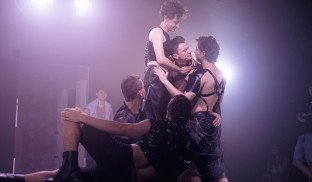
Image from Amir Kolben’s On The Edge show
Kolben Dance Company includes dancers from different parts of the world, with different physical constitutions and movement cultures. About the challenges of working with differences, Kolben says: ”Partly I tamemy dancers, so that they can get closer to my kind of movement. On the other hand, they also tame me by bringingthings into the choreographies that I wouldn’t even dream of bringing, partly because it’s not myesthetics, so I need to open up to those possibilities. Many times I say “no, this doesn’t belong here” (like breakdance). But then I open up to this option. My dancers and I, we educate each other, to grow the horizon of possibilities. It’s a mutual process, not a very calm process, involves a lot of struggles, frustrations, misunderstandings. Sometimes it’s not pleasant. But, if you want to get individuals into your studio, this is the high price you have to pay. And I pay it, for wanting them to be complete persons, not just dancers, so I don’t think I’ll change that.”
The music in On The Edge is more freely chosen and eclectic than in his other pieces..”When I created it, it was quite relieving for me because I actually intended it to be a youth program. It did turn out to be more than that, we realized that quite soon. But feeling less responsibility is a very good and creative artistic tool. I recommend it always to my students at the Jerusalem Academy of Music and Dance, and to myself too.”
On the topic of the amazing number of great Israelian dance companies, Kolben first jokingly complained about it. ”It’s a huge competition. At the same time it’s a challenge, and it pulls you up, you have no other choice but be at your best every time – which, of course, doesn’t always happen. That aside, I think it’s very strange. Jewish tradition is very restrictive towards the body, which is considered some kind of container for the really important things. The culture is not a “body culture”. So actually I have no explanation for that. I personally didn’t choose to be an artist, let alone a dancer and choreographer, it just happened to me. It took me 20 years to understand that I’m stuck with this profession that I didn’t choose, it helps me get back something that belongs to everyone but all of us don’t get enough of, that is an approach of the body. I want to compensate for that and say “Hey, I got a body, I can express myself with it”.
Pictures: Amir Kolben, On The Edge performance, FITS 2018